
Before you go: transit, timing, and money
Three practical things shape a Kyoto trip more than any single temple. Get them right and the itinerary below almost runs itself.
Getting in from the airport
Most visitors land at Kansai International (KIX). The JR Haruka limited express reaches Kyoto Station in about 75–80 minutes for roughly ¥3,060, with a discounted foreigner ticket around ¥2,200. Airport buses take about 100 minutes for ~¥2,800.
Getting around the city
The famous bus-only day pass was retired in 2023–2024 to ease bus overcrowding. Today you either buy the Subway & Bus One-Day Pass (about ¥1,100 adult) or simply tap an IC card like ICOCA or Suica. Buses reach the most temples, but the two subway lines are faster and less crowded — combine them.
Timing and cash
Spring (late March–early April) and autumn (mid-November) are gorgeous but the most crowded; summer is hot and humid. Whatever the season, start early — most temples open at 9:00 a.m., but Fushimi Inari and the Arashiyama bamboo grove are free and open before dawn. Carry cash: many temple gates take yen only.
Day 1 · Southern Higashiyama (east)
Kiyomizu-dera, the old lanes, and Gion
Spend your first day in the most concentrated, walkable stretch of old Kyoto. Everything here is within a slow uphill-then-downhill loop, so you barely touch a bus. Go up to Kiyomizu-dera first thing, then let gravity carry you down through the preserved lanes to Gion.
Getting there
Bus 100 or 206 from Kyoto Station to Gojo-zaka or Kiyomizu-michi (about 15 min, ¥230), then a 10-minute uphill walk. Everything after that is on foot.
Kiyomizu-dera
Opens 6:00 a.m.; closing shifts with the season (roughly 5:30–6:30 p.m.). Admission about ¥500. The wooden veranda over the hillside and the three-stream Otowa waterfall are the highlights — arrive at opening to beat the day-trip crowds.
Sannenzaka & Ninenzaka
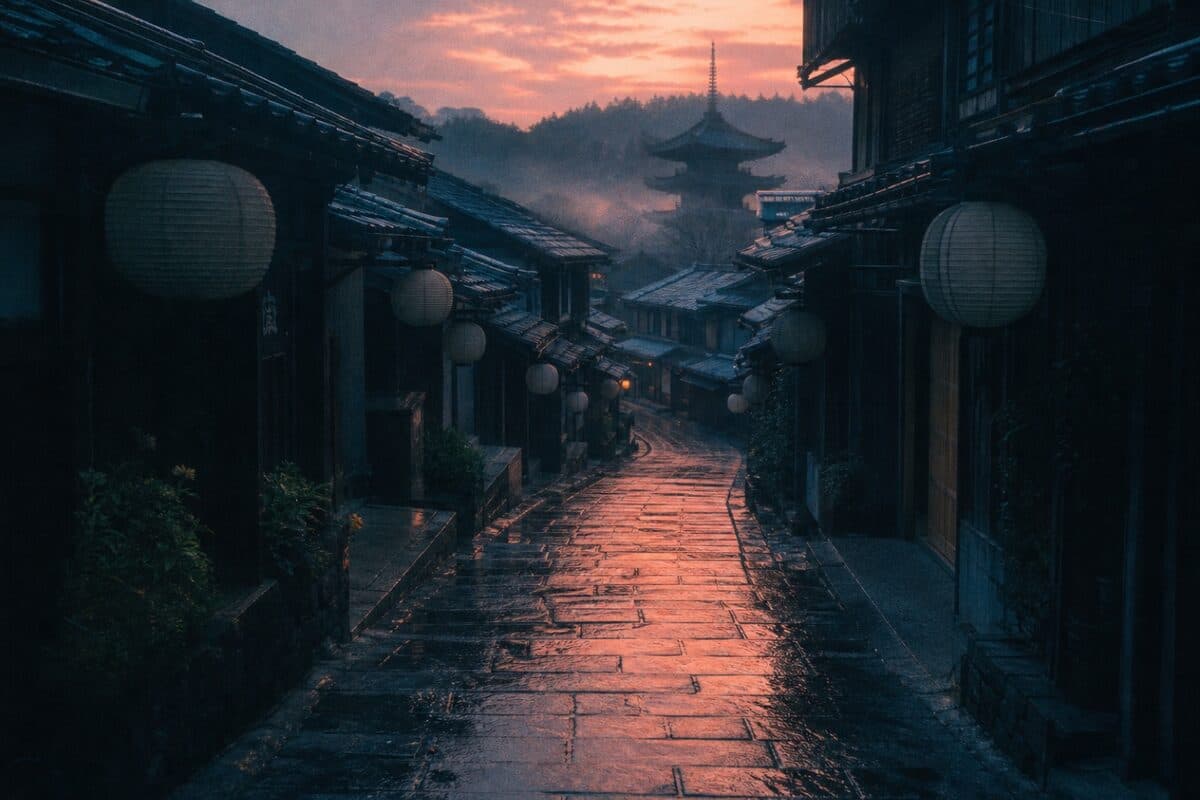
The stone-stepped shopping lanes below the temple — free to walk, full of tea houses, pottery, and sweets. This is the postcard Kyoto most people picture.
Yasaka Shrine & Maruyama Park
A free, open shrine that anchors the north end of the district and flows into the city's most famous cherry-blossom park.
Gion (evening)
Kyoto's geisha district. Walk the public streets — Shijo-dori and Hanamikoji — at dusk. Note: since 2024 the small private alleys are closed to tourists and photographing geiko or maiko on private roads can draw a ¥10,000 fine. Stay on the public streets and don't chase anyone for a photo.
Finish with dinner in Pontocho, the narrow lantern-lit alley along the Kamo River a few minutes from Gion — a natural, backtrack-free end to the day.
Day 2 · Fushimi & the southeast
Fushimi Inari before the crowds
The thousands of vermilion torii gates at Fushimi Inari are the image everyone comes for — and the reason to set an alarm. The shrine is a Shinto mountain, open 24 hours a day, 365 days a year, with no ticket. That unrestricted access is your advantage: by mid-morning the Senbon Torii tunnel is shoulder-to-shoulder; at 7:00 a.m. you can have stretches of it to yourself.
Getting there
JR Nara Line from Kyoto Station to Inari Station — about 5 minutes. The shrine entrance is directly across from the station.
Fushimi Inari Taisha
Free, open 24/7. Aim to arrive between 6:30 and 8:00 a.m. The iconic Senbon Torii section takes 30–45 minutes; the full loop to the summit of Mt. Inari and back is a 2–3 hour hike. Turn around at the Yotsutsuji intersection if you just want the view over the city.
Tofuku-ji
One stop back toward Kyoto on the JR line. A large Zen temple famous for its maple-filled valley and the Tsutenkyo bridge — especially worth it in autumn. A calm counterpoint after the torii crowds.
Central Kyoto & Nishiki Market (afternoon)
Head back into the center for lunch. Nishiki Market — 'Kyoto's Kitchen' — is a covered arcade of food stalls; graze slowly and try local pickles, tofu, and sweets.
Because you'll be up and out early, this is your lightest afternoon — a good day to rest, do laundry, or wander Teramachi and the shopping arcades without a fixed plan.
Day 3 · Arashiyama & Sagano (west)
Bamboo grove, river, and a Zen garden
Arashiyama is the western edge of the city, where the sights sit at the foot of forested hills along the Hozu River. Like Fushimi Inari, the star attraction — the bamboo grove — is free, open 24 hours, and best at dawn. By 10:00 a.m. the roughly 400-metre path is a slow-moving river of people; at 7:30 a.m. it's a quiet green tunnel.
Getting there
JR Sagano (San-in) Line from Kyoto Station to Saga-Arashiyama — about 15 minutes, ¥240 — then a 10-minute walk. The Randen tram is a charming slower alternative.
Arashiyama Bamboo Grove
Free, open 24 hours. Walk it first, before 8:00 a.m., from south to north while it's still quiet. The rustling of the stalks is officially one of Japan's '100 Soundscapes.'
Tenryu-ji
A UNESCO World Heritage Zen temple, open 8:30 a.m.–5:00 p.m. Garden admission about ¥500 (add ¥300 for the buildings). Smart routing tip: its north gate opens directly onto the bamboo grove, so buy the garden ticket, walk through, and exit north into the grove — no backtracking.
Togetsukyo Bridge
Arashiyama's central landmark over the river. Good for photos, riverside strolling, and boat rentals.
Iwatayama Monkey Park or the Sagano Romantic Train
Pick one. The monkey park is a 20-minute hike up for a view over the city and wild macaques; the Torokko sightseeing train rattles scenically along the gorge — book ahead in peak seasons.
Heading back, the Randen tram links Arashiyama toward the Kinkaku-ji/Ryoan-ji area, so an energetic traveler can fold part of Day 4 into the afternoon.
Day 4 · Northern Kyoto
The Golden Pavilion and a real routing decision
Day 4 is where a first-timer's plan most often falls apart, because Kyoto's two most famous pavilions sit on opposite sides of the city. Kinkaku-ji, the Golden Pavilion, is in the northwest; Ginkaku-ji, the Silver Pavilion, and the Philosopher's Path are in the northeast. Doing both means one deliberate cross-town hop — worth planning on purpose rather than discovering at a bus stop.
Getting there
Bus 205 from Kyoto Station to Kinkaku-ji (about 40 min, ¥230), or the faster Karasuma subway to Kitaoji then a short bus. Later, cross the north of the city by bus/subway (roughly 30–40 min) to reach Ginkaku-ji.
Kinkaku-ji (Golden Pavilion)
Open 9:00 a.m.–5:00 p.m., year-round, admission about ¥500. The gold-leafed pavilion mirrored in its pond is a 30–45 minute one-way walk — go early, as it's busiest mid-morning.
Ryoan-ji
A short hop from Kinkaku-ji: Japan's most famous rock garden, fifteen stones in raked gravel. A quiet, contemplative stop that pairs naturally with the Golden Pavilion.
Ginkaku-ji (Silver Pavilion) & the Philosopher's Path
In the northeast. From Ginkaku-ji, the Philosopher's Path is a canal-side walk lined with cherry trees leading south toward Nanzen-ji — one of the loveliest slow strolls in the city.
If the cross-city hop feels like too much for one day, keep Kinkaku-ji + Ryoan-ji in the morning and save Ginkaku-ji and the Philosopher's Path for a relaxed Day 5 instead of the Nara trip.
Day 5 · Day trip or slow finish
Nara — deer, and the world's great bronze Buddha
For a fifth day, Nara — Japan's first permanent capital — is an easy, rewarding day trip. Its main sights cluster in one large, walkable park where around 1,200 semi-wild deer roam freely. If you'd rather not travel again, swap this for a slow central-Kyoto day (Nijo Castle, Nishiki Market, and whatever you skipped).
Getting there
JR Miyakoji Rapid from Kyoto Station to JR Nara — about 45 minutes, ¥720 (covered by the Japan Rail Pass). Or the Kintetsu line to Kintetsu-Nara — about 35–45 minutes — which arrives closer to the park.
Todai-ji (Great Buddha Hall)
A UNESCO temple housing a roughly 15-metre bronze Buddha in one of the world's largest wooden buildings. Admission ¥800 (raised in 2024). Arrive before 10:00 a.m. for photos without the crowds.
Nara Park & the deer
Free and open. Buy ¥200 'shika senbei' crackers to feed the deer, then show empty palms when they're gone. They're wild animals, not pets — bow, feed politely, don't tease.
Kasuga Taisha
A shrine famous for thousands of bronze and stone lanterns, set in the forest at the park's eastern edge. The grounds are free; the inner area has a small fee.
Note the Kofuku-ji five-story pagoda is under a multi-year restoration and currently wrapped from view — one reason to weight your day toward Todai-ji and the park.
How to pace it without temple fatigue
Five days of temples can blur together if every day is packed to the same intensity. The plan above is built to breathe: two dawn starts (Fushimi Inari and Arashiyama) are balanced by lighter afternoons, and the two big-hitter pavilions are split rather than crammed into one exhausting sweep.
| If you feel... | Do this |
|---|---|
| Templed out by Day 3 | Swap a temple afternoon for Nishiki Market, a Kamo River walk, or a tea house — Kyoto is a city to sit in, not just tick off. |
| The Day 4 cross-town hop is too much | Keep Kinkaku-ji and Ryoan-ji in the morning; move Ginkaku-ji and the Philosopher's Path to a relaxed Day 5. |
| You'd rather not day-trip | Drop Nara and spend Day 5 on Nijo Castle, the arcades, and anything you missed — a full slow day inside the city. |
The other quiet upgrade is context. A temple you understand is a temple you remember — so before Fushimi Inari or Kiyomizu-dera, it helps to have the history in your ears rather than reading a plaque in a crowd.
Plan it with HipiMind
Plan this trip by talking
An itinerary like this is easy to read and surprisingly hard to hold in your head — which day was Arashiyama, and does anything backtrack? That is exactly what HipiMind is built for. It is a voice-first AI travel assistant: describe your Kyoto trip out loud — “five days, first time, we like temples and food, hate rushing” — and it turns the conversation into a day-by-day itinerary with every stop placed on a map. When a day secretly crosses the city, like the Golden Pavilion in the northwest and the Silver Pavilion in the northeast, you see the long leg on the map and can say “fix that” before you're standing at a bus stop.
For the temples themselves, ask HipiMind to generate a long-form audio guide about Kyoto — the history of Fushimi Inari, the story behind Kiyomizu-dera's veranda — and listen hands-free on the early train or as you climb Sannenzaka. It is interruptible: pause to ask a question, get an answer, and resume where you left off. It plans and narrates in the language you speak, across 32 languages, right in the browser — no app to install.
The free tier includes 3 voice sessions and 1 audio guide per calendar month. HipiMind Plus is $7.99/month ($59/year) with 60 voice sessions, 20 audio guides, and full trip memory across journeys. HipiMind plans and narrates — it does not book flights, hotels, or temple tickets, and it is not a GPS-triggered on-site tour; confirm times, prices, and reservations with the provider.
Kyoto itinerary FAQ
Is 5 days enough for Kyoto as a first-timer?
Yes. Five days is a comfortable amount of time to see Kyoto's signature areas — Higashiyama and Gion, Fushimi Inari, Arashiyama, and the Golden Pavilion — without rushing, plus a day trip to Nara. The key is grouping sights by neighborhood so you're not crossing the whole city twice a day.
What is the best way to get around Kyoto in 2026?
The old bus-only one-day pass was discontinued (sales ended September 2023, invalid after March 2024). Today most visitors use the Subway & Bus One-Day Pass (about ¥1,100 for adults) or simply tap an IC card such as ICOCA or Suica. Combining the subway with buses is faster than buses alone and helps you avoid the most congested routes.
How do I get from Kansai Airport (KIX) to Kyoto?
The JR Haruka limited express runs from Kansai Airport to Kyoto Station in about 75–80 minutes for roughly ¥3,060 (non-reserved). Foreign visitors can buy a discounted Haruka one-way ticket for about ¥2,200. Airport buses (~100 min, ~¥2,800) are a cheaper alternative.
When should I visit Fushimi Inari and the Arashiyama bamboo grove?
Both are free and open around the clock, and both are transformed by timing. Arrive between roughly 6:30 and 8:00 a.m. to walk them in relative quiet; by mid-morning both become extremely crowded. Getting these two done early is the single biggest upgrade to a Kyoto trip.
Can I still see geisha in Gion, and are there rules?
You can walk Gion's public streets, such as Shijo-dori and Hanamikoji, in the evening and may glimpse geiko or maiko heading to appointments. But since 2024 the small private alleys are closed to tourists, and photographing geisha on private roads can incur a ¥10,000 fine. Keep your distance, stay on public streets, and don't chase anyone for a photo.
Do temple prices and opening hours change?
Yes. Admission fees and hours are adjusted periodically — Todai-ji in Nara raised its fee in 2024, and temples add seasonal evening illuminations with separate tickets. Treat the figures in this guide as a 2026 baseline and confirm the specific places on your list before you go.
How can HipiMind help me plan a Kyoto trip?
HipiMind is a voice-first AI travel assistant: describe your Kyoto trip out loud and it turns the conversation into an editable, day-by-day itinerary with every stop on a map, so you can immediately see when a day crosses the city and fix the route. It can also generate a long-form audio guide about Kyoto you listen to hands-free on the train or while you walk. It does not book flights, hotels, or temple tickets — confirm those with the provider.
Sources
Opening hours, fares, and admission figures in this guide were grounded in the following official and authoritative sources (checked July 2026). Details change seasonally — verify before you travel.
- Kyoto City — Subway & Bus One-Day Pass (official)
- JR West — Haruka one-way ticket (official)
- Fushimi Inari Taisha (official)
- Kinkaku-ji / Shokoku-ji — access & hours (official)
- Kiyomizu-dera Temple (official)
- Tenryu-ji, Arashiyama — admission & access (official)
- Japan Guide — getting to and around Nara
- CNN — Kyoto acts on 'geisha paparazzi' in Gion